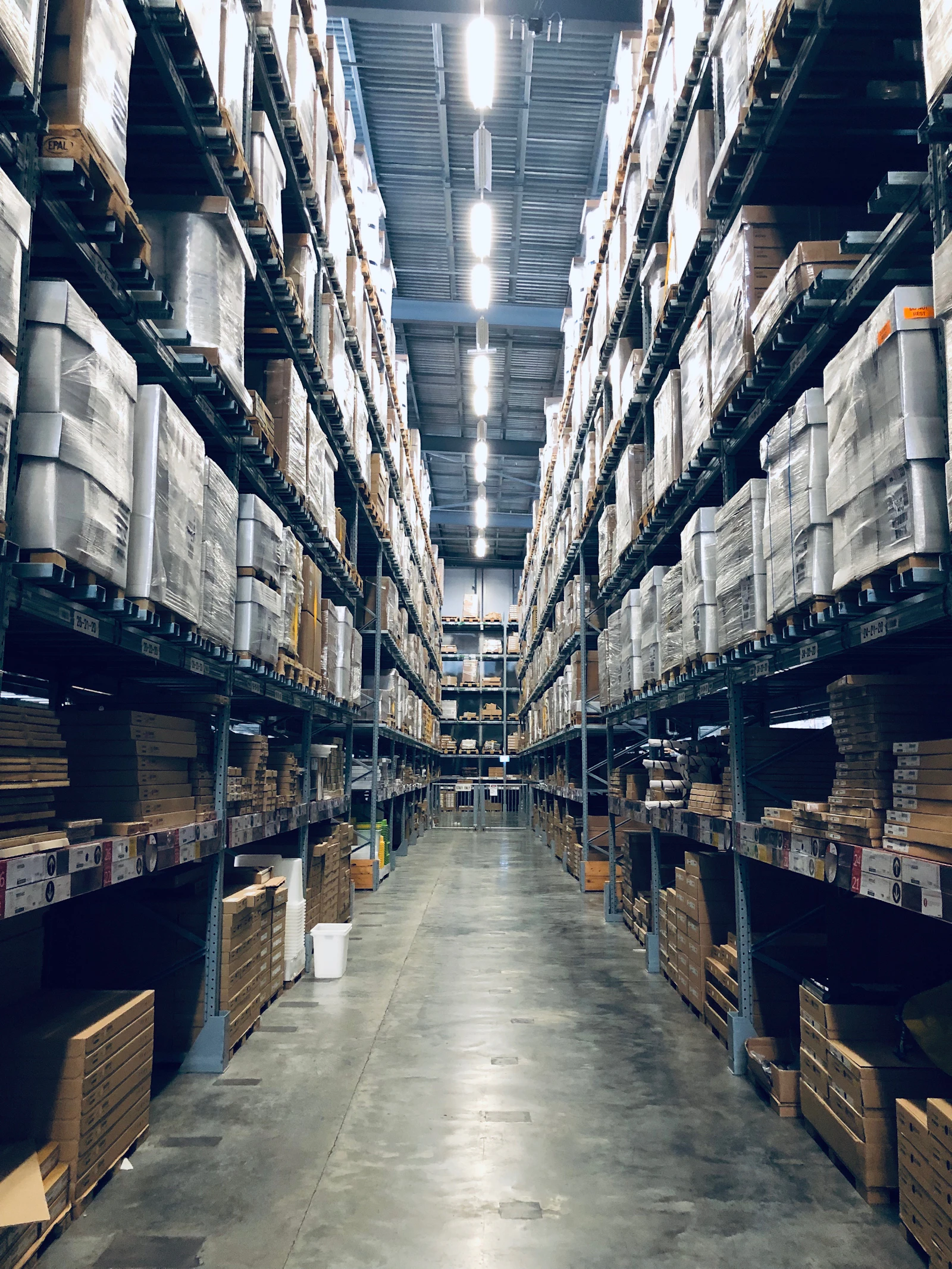

Shopify order fulfillment is the workflow that turns a placed order into a delivered package. For dropshippers it's mostly automated upstream (the supplier ships); for DTC brands it's the operational core of the business. Automating fulfillment correctly is the difference between scaling to $500K/month with one founder and scaling to $50K/month and stalling.
This article walks through the fulfillment stages, the right automation tier per revenue band, and the failure modes that show up in customer complaints before they show up in the dashboard.
The four fulfillment models
1. Self-fulfillment (you ship orders yourself)
When it works: $0–$30K/month for small SKU counts. Founder packs and ships from home or a small space.
Pros: Full quality control, low cash overhead, brand touchpoint (handwritten notes, custom packaging) you can't replicate at 3PL scale.
Cons: Doesn't scale. Each order takes 10–20 minutes to pick, pack, ship — at 50 orders/day you're spending 8–10 hours/day on fulfillment alone.
2. Dropship (supplier ships direct to customer)
When it works: Almost any revenue band, if your supplier is reliable. Most common for low-AOV consumer goods.
Pros: No inventory cash tied up; no warehouse needed; scales infinitely on the operations side.
Cons: Lower margin (supplier captures fulfillment cost); zero brand control over packaging or unboxing experience; supplier failures are your customer-facing failures.
3. 3PL (third-party logistics provider)
When it works: $30K/month+ for DTC brands holding inventory. ShipBob, Shippo, Easyship, Deliverr, regional 3PLs.
Pros: Faster shipping than self-fulfilled; multi-region warehouses (East Coast + West Coast US); dramatically reduces founder time on fulfillment.
Cons: Per-order pickup fees ($2–$5) plus storage fees plus shipping. Compared to self-fulfilled, 3PL costs ~$5–$10 more per order. Customization (notes, special packaging) is hard or expensive.
4. In-house warehouse
When it works: $500K+/month for established DTC brands.
Pros: Full control over fulfillment quality, packaging, customer experience.
Cons: Capital intensive (lease, equipment, staff); operational complexity (HR, ops management); fixed cost regardless of volume.
Most stores don't need their own warehouse until they're spending $20K+/month at a 3PL — at which point doing it in-house starts breaking even.
The fulfillment stack by revenue band
$5K/month: just keep up
- Model: self-fulfill or dropship.
- Tools: Shopify's built-in fulfillment + Shopify Shipping for postage labels.
- Time: 1–3 hours/day on fulfillment.
- Don't do: bulk-buy packaging supplies; sign 3PL contracts; over-engineer.
$30K/month: automate the routine
- Model: dropship (likely already), or self-fulfill with batched workflows.
- Tools: Shopify Order Printer for batch label printing; ShipStation or Shippo for multi-carrier rate shopping.
- Time: 2–4 hours/day, batched.
- Hire: a part-time VA at $5–8/hr to do customer support so you can focus on fulfillment + acquisition.
- Don't do: 3PL transition yet (unless you're hitting 100+ orders/day).
$100K/month: 3PL or scale operations
- Model: 3PL strongly preferred for DTC brands; dropshippers stay dropship.
- Tools: 3PL's native dashboard + Shopify integration; rate-shopping tools like ShipStation; customer-facing tracking (Aftership, Wonderment).
- Time: 30 min–1 hour/day on fulfillment, mostly exception handling.
- Hire: ops manager (can be part-time at this stage) to manage 3PL relationship and exceptions.
$300K/month+: systematize
- Model: established 3PL relationship, possibly multi-region warehouses.
- Tools: full ERP-light setup (Cin7, Shopify Plus + apps); EDI integrations for big retail channels if relevant; advanced inventory forecasting.
- Time: founder mostly out of fulfillment; ops manager runs day-to-day.
- Hire: dedicated operations team (2–4 people) handling fulfillment, supplier coordination, returns.
What automation actually buys you
Three categories of time savings, in order of ROI:
1. Batch label printing
Most stores at $5K+/month have multiple orders/day. Printing one label at a time wastes 30–60 seconds per label. Batch printing (Shopify's bulk action or ShipStation) takes 5 minutes for 50 labels.
Time saved: 20–40 min/day at 30 orders/day. Pays back ~10 hours/month.
2. Multi-carrier rate shopping
For self-fulfilled stores: rate-shopping tools (ShipStation, Shippo, Easyship) compare USPS/UPS/FedEx for each order and pick the cheapest. Typical savings: 10–20% on shipping.
Cost saved: $200–$800/month at 30 orders/day. Tool cost: $30–$80/month. Net: positive.
3. Customer tracking automation
Aftership / Wonderment proactively notify customers of shipping status. Reduces "where's my order" tickets by 40–60%.
Time saved: 1–2 support hours/day. Customer experience also improves.
The exception-handling workflow
Most automation handles the 95% normal case. The 5% exceptions cost more time than the 95%:
- Wrong item shipped: reach out to customer, send replacement, eat the loss. Document why.
- Damaged in transit: typically file claim with carrier; replacement to customer.
- Lost package: investigate with carrier; if confirmed lost, replacement.
- Customer changed address after shipment: reroute (if possible) or wait for return-to-sender.
- Returns: see returns management guide.
Document each exception. Patterns emerge — the wrong-item-shipped issues might cluster on a specific SKU pair (similar look, easy to swap), suggesting a process fix.
Common fulfillment mistakes
Over-buying packaging supplies
Custom-printed boxes for a $20K/month brand at 5K-unit MOQ ties up $5K+ of cash for 6 months of supply. Buy stock packaging until you have 6+ months of consistent demand.
Choosing 3PL too early
A 3PL at $5K/month volume is more expensive than self-fulfilling. The fixed monthly minimums + per-order fees crush thin-margin businesses. Wait until 80–100 orders/day at minimum.
Not negotiating shipping rates
Carrier rates are negotiable above ~50 daily packages. Most merchants pay published rates indefinitely. Negotiate with USPS, UPS, FedEx at $30K+/month — typical savings 10–25%.
Ignoring returns workflow
A return that takes 2 weeks to process is a customer complaint waiting to happen. Build the returns workflow into fulfillment automation, not as an afterthought.
Mixing dropship and self-fulfilled SKUs
Customers expect uniform shipping speeds. Half-dropshipped, half-self-fulfilled stores create variable expectations and confused complaints. Pick one model per SKU; ideally per category.
Frequently asked questions
When should I switch from self-fulfillment to 3PL?
Around 80–100 orders/day for most DTC brands. Below that, the per-order cost premium of 3PL doesn't pay back. Above that, self-fulfillment caps your time. Some founders push to 150/day before transitioning; the right answer depends on margin headroom.
How much does 3PL cost?
$3–$8 per order all-in (storage + pickup + shipping markup) for typical small-package fulfillment. Bigger packages cost more. Compare against your in-house cost (your time at opportunity cost + supplies + your shipping rate).
Should I offer free shipping?
For under $40 AOV: usually no — shipping is too high a percentage of order. For $40–$80 AOV: free over a threshold (e.g., free over $50). For $80+ AOV: free standard shipping is typically expected and lifts conversion.
How do I handle international shipping?
Below $30K/month: skip international or restrict to a few easy markets (Canada, UK). Above $30K/month: use Easyship or similar for international rate shopping; consider DDP (delivered duty paid) shipping for major markets so customers don't get surprise customs charges.
Does DropifyXL touch fulfillment?
No — DropifyXL is in the rules + recommendations layer, not the fulfillment layer. Fulfillment is handled by Shopify's native tools, your 3PL, and rate-shopping tools like ShipStation. DropifyXL surfaces operational signals (e.g., "this SKU is selling 3× faster than last month, you may need to reorder") that inform fulfillment decisions.
Key takeaways
- Self-fulfillment caps at ~150 orders/day. Below: optimize accuracy. Above: optimize systems.
- The four models: self-fulfill, dropship, 3PL, in-house warehouse. Match to revenue band.
- Three highest-ROI automations: batch label printing, multi-carrier rate shopping, customer tracking notifications.
- Negotiate carrier rates at $30K+/month. Most merchants leave 10–25% on the table.
- Don't switch to 3PL too early; don't over-customize packaging too late.
Fulfillment is the unsexy operational backbone. Founders who treat it as a system (with clear stages, automated tooling, exception protocols) stay focused on growth. Founders who treat it as ad-hoc work get pulled into it indefinitely.