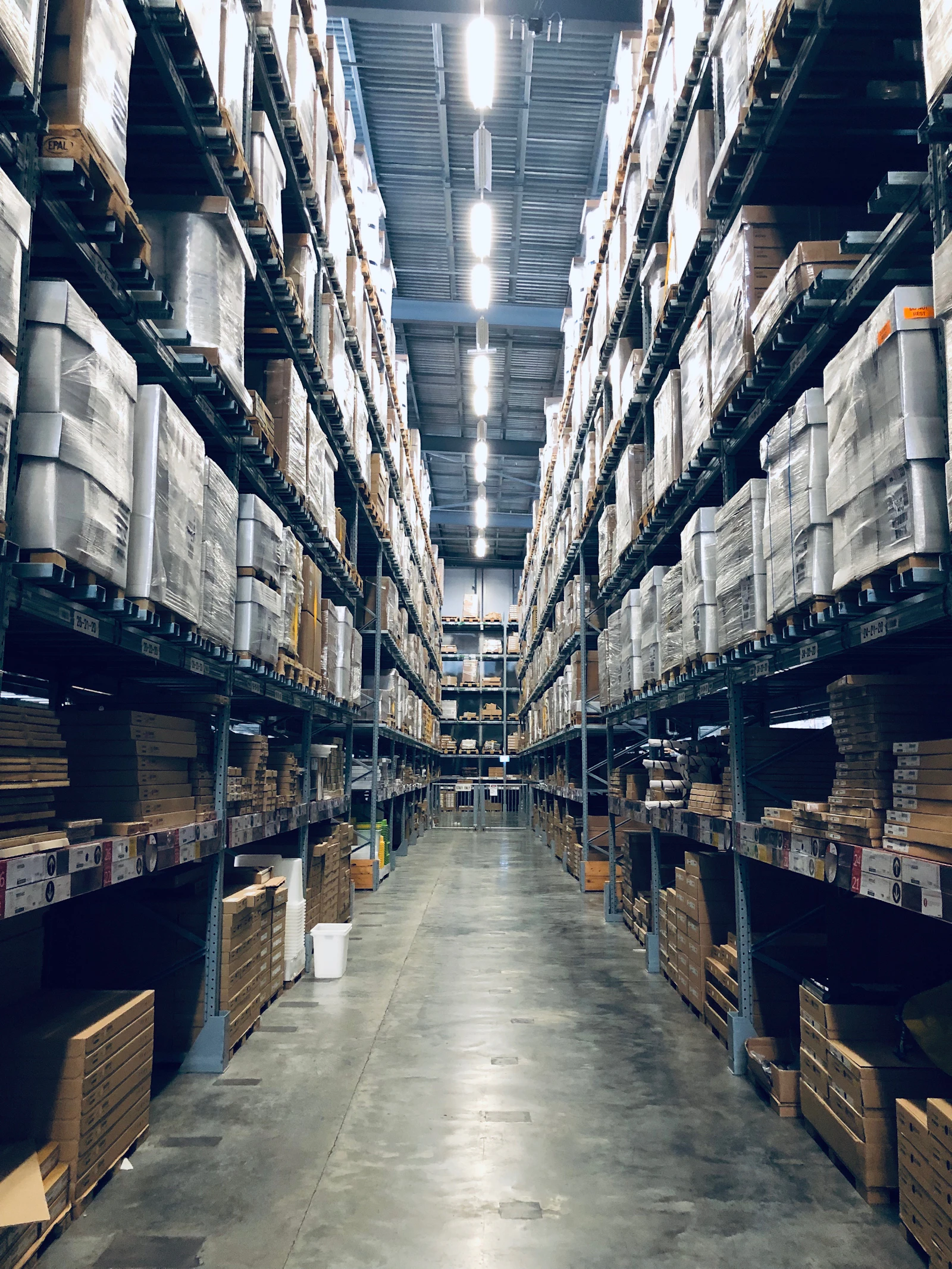

International commerce on Shopify opens 5–10x your addressable market in theory. In practice, customs, duties, and import handling add a layer of complexity that quietly destroys margin and converts buyer trust into chargebacks if it's mishandled. This guide walks through the operational reality of selling internationally — what duties actually are, what DDP means, when to charge them, and how to set up Shopify so the international experience is as clean as domestic.
This is the companion piece to our international expansion guide — that one covers the strategic question of whether to go international; this one covers the operational how.
What duties actually are (and why they bite)
When a parcel crosses an international border, the importing country's customs authority assesses two things:
- Duties (tariffs): A percentage of declared value, based on the product's tariff classification (the HS code) and the country pair (origin → destination). Duties on apparel coming from China to Germany are different from electronics coming from Vietnam to the US.
- Import VAT or sales tax: A flat percentage on declared value (common rates: 19% Germany, 20% UK, 21% Netherlands, 25% Sweden, 5% UAE, 10% Australia GST, 13% Canada).
The combined "landed cost" of an international parcel can be 25–45% above the cart total when duties + VAT compound. A buyer who paid $100 at checkout and now owes €47 to receive their parcel does not buy from you again.
Where this kicks in
- Order over the de minimis threshold: Each country has a value below which duties/VAT aren't collected. US has historically been generous ($800), the EU dropped its de minimis to €0 in 2021 (everything is taxed), the UK is £135. Below the threshold, the parcel passes without import charges; above, the buyer (or you, if DDP) pays.
- Specific product categories: Some categories have higher duty rates regardless of value (e.g., textiles, alcohol, electronics in some markets).
- Paperwork errors: Missing or incorrect HS codes, wrong country of origin, undervalued declarations — any of these can hold a parcel in customs for days, accumulating storage fees.
DDP vs. DDU: the choice that matters most
Two shipping models exist for cross-border parcels:
DDU (Delivered Duty Unpaid) — also called DAP (Delivered at Place)
The buyer pays duties and VAT to the carrier upon delivery. The seller collects only the merchandise price plus shipping at checkout.
- Pros: Simpler for the seller; no duty calculation at checkout; lower checkout price (which can convert better).
- Cons: Surprise duty bills generate chargebacks, refusals, and bad reviews. The buyer's experience is broken.
DDU is appropriate when: (1) you're early in international expansion and don't want the operational complexity, (2) you're transparent at checkout about duties being collected at delivery, and (3) your buyer audience is sophisticated enough to expect this (B2B, certain technical product categories).
DDP (Delivered Duty Paid)
The seller calculates and collects duties + VAT at checkout. The seller pays the carrier or customs broker. The buyer receives the parcel with no surprise charges.
- Pros: Clean buyer experience; no surprise bills; matches the domestic-shopping mental model.
- Cons: Higher operational complexity; you (or your carrier) must classify products correctly; mistakes cost you money; checkout price looks higher.
For consumer-facing brands, DDP is almost always the right choice above the de minimis threshold. The conversion-rate hit from a higher checkout total is real but smaller than the lifetime damage from a single botched DDU delivery.
How Shopify Markets handles duties
Shopify Markets (released 2021, expanded substantially) is Shopify's native solution for international:
Built-in features
- Multi-region pricing: Set different prices per market (or apply percentage adjustments).
- Multi-currency: Display and charge in local currency, with FX handled by Shopify.
- Local payment methods: iDEAL in Netherlands, Klarna in Europe, Pix in Brazil, etc.
- Geographic redirects: Send buyers to the right regional storefront automatically.
- Duties and import taxes (Shopify Markets Pro / DDP): Calculate and collect duties at checkout for ~100 destination countries.
What Markets does for duties (Markets Pro on US-origin)
For US-based stores using Shopify Markets Pro:
- Buyer adds product to cart.
- At checkout, Shopify calculates expected duties and VAT for the destination country, based on HS codes (which you provide on product setup).
- Checkout displays the breakdown: subtotal + shipping + duties + VAT = total.
- Buyer pays the all-in total.
- Shopify (or its partner) handles customs filing.
- Parcel arrives at the buyer's door with no additional charges.
The cost: Markets Pro adds a per-order fee plus a percentage of the duty. The merchant remits the collected duties to Shopify; Shopify handles the customs broker relationship.
What Markets doesn't do
- HS code classification: You must classify each product (or use a service that does). Misclassification means wrong duty calculations.
- Country-of-origin tracking: Required for accurate tariffs. You provide the data.
- Restricted product handling: Some products (cosmetics, electronics, foods) have additional regulatory hurdles. Shopify doesn't filter for compliance.
- Returns from international: International returns are a separate operational problem; see below.
HS codes: the part most stores get wrong
The Harmonized System (HS) code is a 6-digit (sometimes 8 or 10) classification that customs uses to determine duty rates. Examples:
6109.10— T-shirts, knitted, of cotton6403.99— Footwear with leather upper, other8517.13— Smartphones3304.99— Cosmetics, other
Every product you ship internationally needs an accurate HS code. Wrong codes mean wrong duties (sometimes zero duty applied when there should be 12%, sometimes 30% applied when it should be 8%) and create compliance liability.
How to classify products
- Shopify Markets includes HS codes for the Shopify standard taxonomy. If your products use those categories, codes are pre-assigned.
- For custom products, you classify manually — start with USITC's HTS search or your destination country's customs site, find the closest match.
- For ambiguous cases, hire a customs broker for one-time classification consulting (~$200–$500 per product line).
- For high-volume international stores, use a service like Avalara CrossBorder or Zonos to automate classification at scale.
The cost of wrong codes adds up: $0.50 per parcel of overcharged duty across 5,000 parcels is $2,500 of margin you didn't need to lose, or $2,500 of customs liability you owe.
VAT registration thresholds
If you sell into the EU above certain thresholds, you may be required to register for VAT in the destination country and collect/remit it directly:
- EU: Above €10K total annual cross-border B2C sales into the EU, you register for OSS (One-Stop Shop) and collect VAT at the destination country's rate. Below, you can choose to use your home country's VAT rate.
- UK: Above £85K of UK sales, you register with HMRC. For sub-£135 orders into the UK, foreign sellers must register and charge UK VAT regardless of total volume (a post-Brexit rule).
- Australia: GST registration required above AUD $75K of Australian sales. Below, no GST collected.
- Canada: GST/HST registration required above CAD $30K of Canadian sales.
These are the broad rules; consult a tax advisor for your specific situation. Shopify Markets handles VAT collection for you in many cases but does not register your business — that's your responsibility.
International returns: the operational reality
International returns are 5–15x more expensive than domestic returns:
- Reverse shipping: Return shipping from EU to US averages $25–$60 vs. $7–$15 domestic.
- Customs on the way back: Returned goods may be assessed duties again (yes, on a return) without proper paperwork.
- Restocking time: Returns from international travel 2–4 weeks; the SKU is unavailable for resale during that window.
- Refund timing: Buyers expect quick refunds; you don't have the goods back for 3–5 weeks.
The fix is a separate international return policy:
- Returns accepted up to 30 days (vs. 60 domestic).
- Buyer pays return shipping (or a reduced refund).
- Returns ship to a regional consolidator, not back to your warehouse.
- Some products (high-value, low-resale-margin) excluded from international return entirely.
For deeper coverage, see the returns management guide.
Common international ops mistakes
- Treating de minimis as a fixed number. Thresholds change (the EU dropped to €0 in 2021; the US is being debated). Stay current.
- Skipping HS code classification. "Other / Miscellaneous" defaults trigger high-duty rates. Classify properly.
- DDU shipping with no checkout disclosure. A buyer who pays at the door without expecting it is a chargeback waiting to happen.
- Not registering for VAT when required. Gets caught eventually; back-payments + fines are worse than running compliant.
- Same shipping policy domestic and international. Free shipping on $50+ destroys margin in international when actual cost is $35+.
- Same return policy domestic and international. A 60-day free-return policy is fine domestically; internationally, it's punishing.
- Pricing parity across markets. A $50 product in the US ≠ €50 in Germany ≠ £50 in UK ≠ A$50 in Australia. Set per-market pricing.
- Ignoring the FX float. When you charge €100 and your bank converts it to USD a day later at a different rate, you lose 1–2% to FX. Factor it into margins.
Frequently asked questions
Should I ship DDP or DDU?
For consumer-facing brands selling to retail buyers, DDP is almost always right. The conversion-rate cost of a higher checkout total is smaller than the long-term damage from buyers refusing parcels at the door over surprise customs bills. DDU is acceptable for B2B or technical buyers who expect to handle import themselves.
Do I need to register for VAT in every country I sell to?
Often no, thanks to schemes like the EU OSS (One-Stop Shop) that let you register once and remit VAT to all EU countries through your home country. The UK requires registration for low-value imports regardless of volume. Australia, Canada, Japan, and others have country-specific thresholds. Consult a tax advisor for the latest.
How does Shopify Markets calculate duties?
Shopify Markets uses the HS code assigned to each product and the destination country's tariff schedule to calculate duty rates, plus the destination's VAT rate. The math runs at checkout. Markets Pro additionally collects the duty and remits it to a customs broker, who handles the actual import filing.
What is the de minimis threshold?
The de minimis threshold is the order value below which the destination country doesn't collect duties or VAT. Major thresholds (subject to change): US — currently $800 but under political review; EU — €0 since 2021 (everything taxed); UK — £135 above which you must register if foreign-based; Australia — A$1,000.
How do I find the HS code for my product?
Three options: (1) Use the Shopify standard taxonomy which has HS codes pre-assigned for common categories; (2) Search USITC HTS (US) or the destination country's customs site for your product type; (3) Hire a customs broker for high-value or ambiguous categories. Wrong codes mean wrong duties — get this right.
Can I refuse to sell to certain countries?
Yes. Set shipping zones in Shopify Admin to include only countries you want to serve. Common reasons to exclude: high-fraud regions, regulatory complexity (alcohol, electronics restrictions), countries where return logistics are infeasible, sanctioned territories.
Key takeaways
- DDP shipping (duties paid at checkout) is almost always the right choice for consumer-facing brands. The buyer experience is clean; chargebacks drop dramatically.
- Each product needs an accurate HS code for correct duty calculation. Default-classified products are usually overcharged.
- EU dropped de minimis to €0 in 2021. Every parcel into the EU is taxable. The UK's £135 threshold has post-Brexit complications. Stay current on thresholds.
- VAT registration thresholds vary by country. EU OSS simplifies multi-country EU compliance. Australia, Canada, UK, and others have country-specific rules.
- Shopify Markets Pro automates duty calculation, VAT collection, and customs filing for many destinations from a US origin. Costs per-order plus a percentage of duty.
- International returns cost 5–15x domestic. Use a different return policy: 30-day window, buyer pays shipping, regional consolidators.
- Per-market pricing is essential. $50 in the US should not be €50 in Germany — adjust for FX, market expectations, and competitive positioning.
- A weekly action plan from DropifyXL flags international order issues — orders held in customs, refund spikes from a specific country, return-rate anomalies — so problems surface before they pile up.
International is one of the highest-leverage growth levers on Shopify when handled right. Most stores get the customer acquisition right and the customs operations wrong — and the operational mistakes destroy the acquisition gains.